Web Article
Digital Medical Education & Research: Why Healthcare Professionals Must Adapt to an AI-Driven Future
Created on August 19, 2026
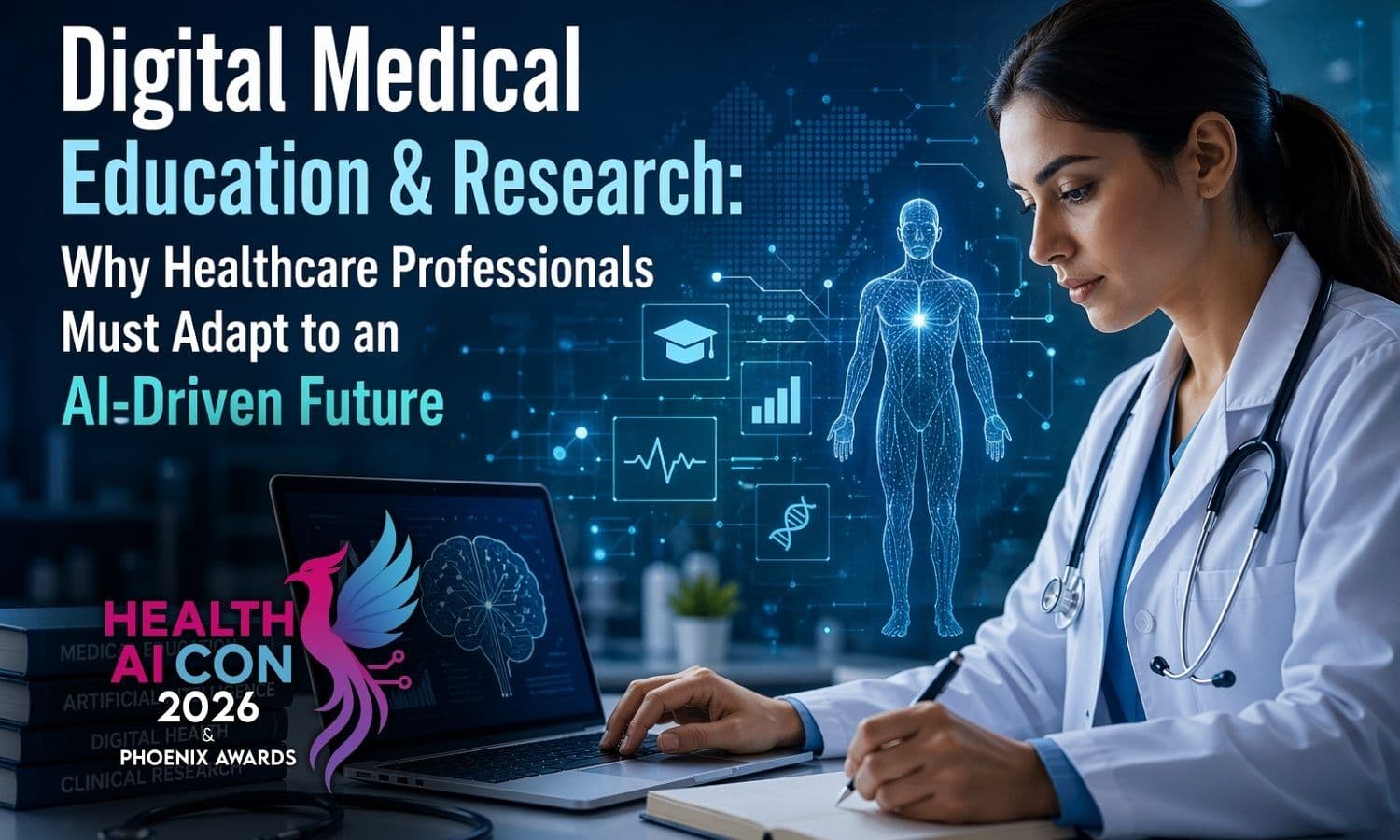
The healthcare landscape is undergoing a significant evolution driven by the increasing integration of Artificial Intelligence (AI), big data, and digital health platforms. This transformation profoundly impacts how healthcare professionals learn, practice, and innovate, making proficiency in digital tools a crucial clinical competency. Traditional medical education methods, characterized by static curricula, are being revamped through digital platforms that offer dynamic, accessible, and continuous learning experiences. These platforms utilize e-learning modules, virtual simulations, and digital case-based discussions to standardize education, broaden its reach, and support lifelong learning, a need emphasized by the World Health Organization.
AI serves as a powerful catalyst in medical training, offering personalized learning pathways, real-time clinical simulations, and improved diagnostic training through advanced pattern recognition. Such technologies enable learners to interact with intricate clinical scenarios in a controlled setting, thereby enhancing their decision-making abilities and clinical confidence. Despite these advancements, the widespread adoption of digital medical education and AI-driven research faces several obstacles. These include disparities in digital infrastructure, limited AI literacy among healthcare professionals, and critical concerns regarding data privacy and the ethical deployment of AI. Additionally, issues surrounding the transparency and rigorous validation of certain AI models present further challenges.
A structured approach is vital for a successful digital transformation, ensuring that technological integration aligns with clinical requirements while upholding patient safety and quality of care. The article concludes that digital medical education and research are indispensable for the future of healthcare. It highlights the imperative for professionals to adapt to and responsibly integrate these evolving technologies to significantly enhance clinical care, drive research innovation, and improve the overall efficiency of health systems.
Summarized using AI, subject to mistakes
Loading...