Web Article
Surgeons Use Teleoperated Humanoid Robots to Perform Live Surgery – a World First
Created on July 13, 2026
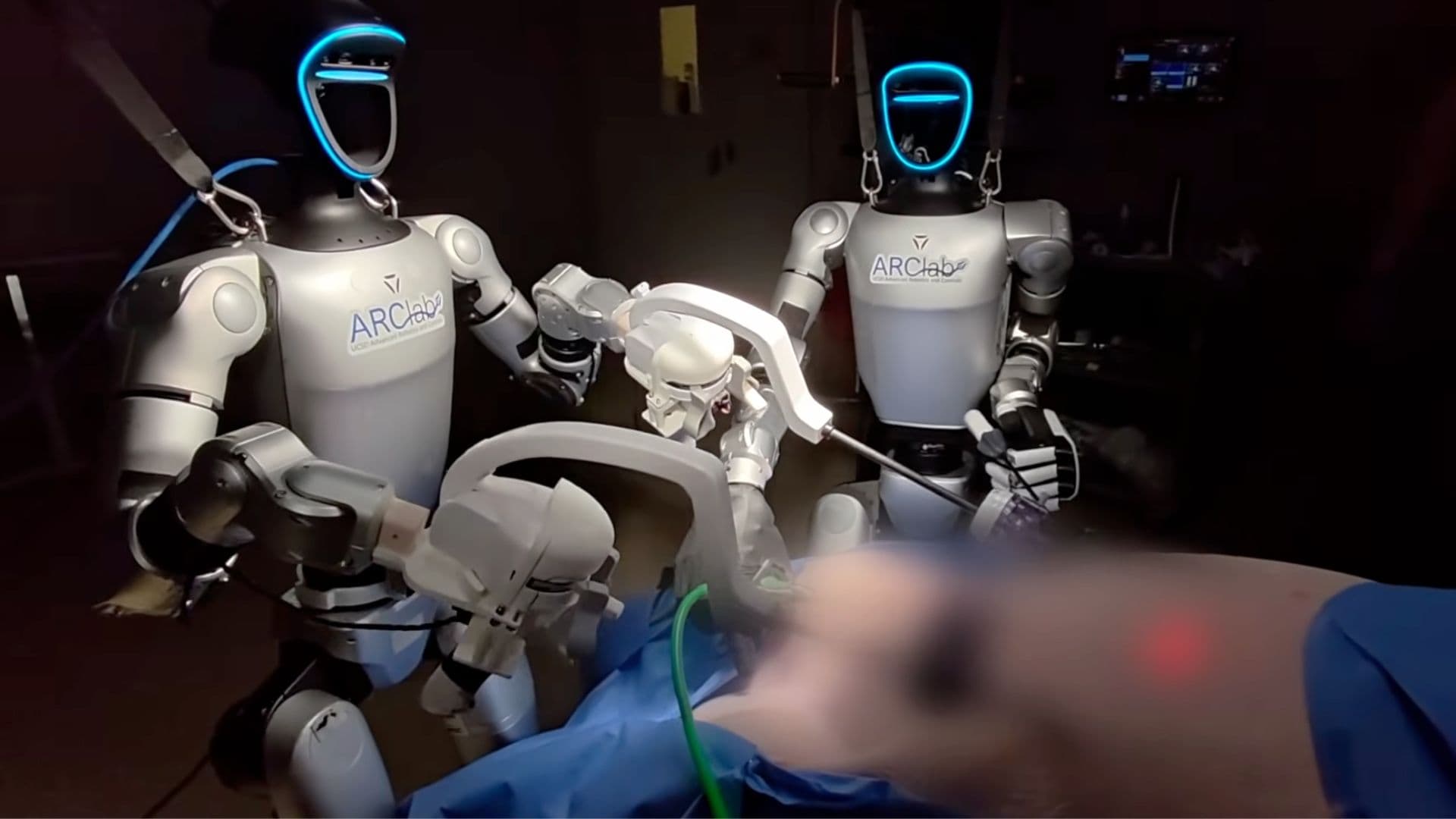
A collaborative team of engineers and surgeons at the University of California San Diego (UC San Diego) achieved a significant medical milestone by using teleoperated humanoid robots to conduct two live surgical procedures. These preclinical trials, reported in the journal Nature, involved performing gallbladder removals on large non-primate mammals. One surgery was completed by a human-robot team, with a humanoid robot and a human surgeon assisting, while the second procedure was fully executed by two humanoid robots working in tandem.
The researchers developed a teleoperation framework for general-purpose humanoid robots, distinguishing them from traditional, specialized surgical robots that are often bulky, expensive, and require dedicated infrastructure. The humanoid system, nicknamed "Surgie," stands about five feet tall and weighs approximately 60 pounds, designed to work with standard laparoscopic instruments. This versatility makes them easier to deploy in diverse settings, including remote areas, battlefields, or even space, where specialized equipment is impractical.
This proof-of-concept experiment aims to tackle the growing global shortage of surgeons, which leads to extended wait times and healthcare disparities. Humanoid robots could first assist during procedures and eventually perform surgeries under remote human control, thereby amplifying access to critical care. While the initial trials required recalibrations and experienced latency issues, which prolonged the procedures, researchers anticipate these challenges will diminish with further development, similar to the evolution of early specialized robotic systems. The project highlights a future where humans and adaptable humanoid robots collaborate in operating rooms to enhance surgical accessibility and efficiency.
Summarized using AI, subject to mistakes
Loading...